
The journey of spiritual awakening is often described as transformative and beautiful. But for some, that powerful internal shift can become terrifying. What happens when profound spiritual insights or visions turn into overwhelming distress, fear, and a loss of connection to reality? This is the fear that haunts many on a rapid spiritual path: Am I having a breakthrough, or am I suffering a breakdown?
The crisis that occurs when spiritual and psychological realities collide is often referred to as Spiritual Psychosis.
We’re diving into this critical topic to bring clarity and safety to the discussion. This article will define this powerful state, show you how to distinguish it from a normal spiritual emergency, examine the core signs, and outline the necessary steps for stabilization and integrated healing.
What is Spiritual Psychosis?
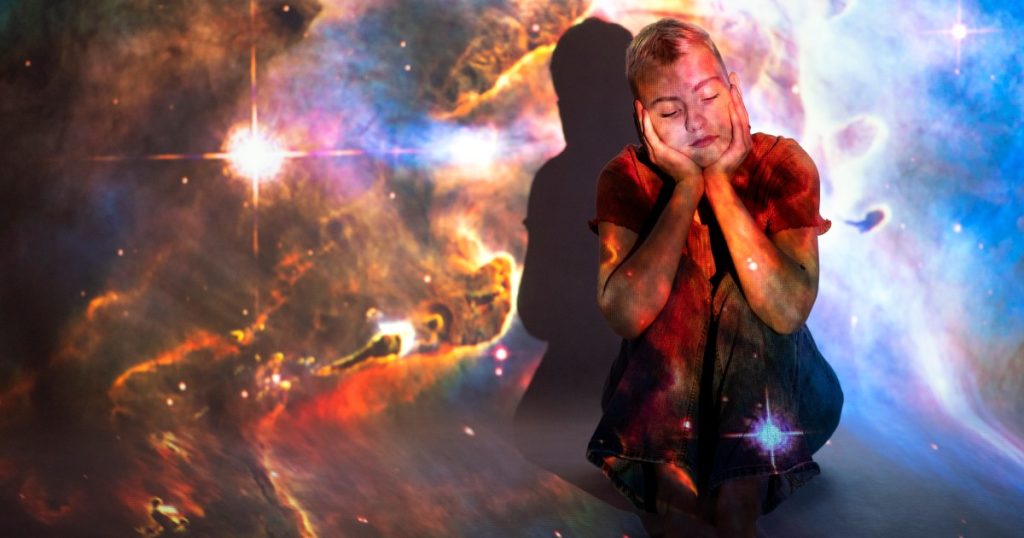
It is important to state clearly that spiritual psychosis is not a formal clinical diagnosis you will find in standard medical textbooks. Instead, it is a term used to describe a severe psychotic episode, a temporary loss of contact with reality, where the delusions and hallucinations focus heavily on spiritual, mystical, or religious themes.
Spiritual Psychosis vs. Spiritual Emergency
The most crucial step in navigating intense spiritual experiences is understanding the difference between a spiritual emergency and a state of spiritual psychosis. While both are intense, one is a crisis of growth, and the other is a clinical crisis.
Spiritual Emergency
A spiritual emergency (often called a psychospiritual crisis) is seen by transpersonal experts as a potentially overwhelming but fundamentally transformative event. It is intense and disruptive, but it contains the seeds of growth.
Functionality: The individual generally retains some self-awareness, can communicate coherently, and manages most basic self-care and daily work.
Emotional Tone: Experiences often include profound feelings of awe, unity, profound love, or clarity, even if the intensity is overwhelming.
Rigidity: The experience is fluid; the individual can usually question their own perceptions and remains open to integration and exploring the meaning of the event.
Spiritual Psychosis
Spiritual psychosis describes a full clinical psychotic episode where the content is spiritual. This requires immediate clinical stabilization.
Functionality: There is severe impairment. The person becomes incapable of managing daily life, self-care, or distinguishing fantasy from reality. They have lost a stable grip on their functional world.
Emotional Tone: The experience is defined by terror, confusion, intense paranoia, and instability. The person is distressed and overwhelmed by fear.
Rigidity: The delusional belief is rigidly held and cannot be questioned or reasoned with by others. The individual is not open to integrating the experience; they are absorbed by it.
The simple line to remember is this: If the experience has completely overwhelmed your ability to function in the world and is dominated by terror, it has likely crossed into a psychotic state requiring clinical intervention.
5 Core Signs of Spiritual Psychosis
How do you know if the experience has moved beyond a temporary spiritual intensity into a medical crisis? Look for these core signs:
- Paranoid and Grandiose Delusions: The person genuinely believes they have supernatural, world-saving powers, or that they are being persecuted by dark, organized spiritual forces.
- Disorganized Thinking and Speech: Thoughts are racing uncontrollably, speech becomes incoherent, jumps between unrelated topics rapidly, or involves forming neologisms (new, self-invented words).
- Intense Distress and Fear: The experience is not characterized by peace or insight, but by profound terror, panic, and unrelenting mental anguish.
- Inability to Ground: There is a total functional breakdown. The person cannot perform basic chores, manage finances, or maintain any connection to a structured routine.
- Hostility to Challenge: The individual becomes angry, aggressive, or defensively rigid when a loved one gently questions the reality of their experience.
How Spiritual Psychosis Affects You
The impact of spiritual psychosis goes far beyond the immediate episode, causing deep damage to the individual’s world:
Isolation and Alienation: Because the experience is so strange, the individual is often pushed away from their support system. Family and friends cannot understand the content of the crisis, leading to deep loneliness and misunderstanding.
Physical Depletion: The crisis is often accelerated by severe sleep deprivation (insomnia). The lack of restorative sleep prevents the brain from stabilizing, leading to physical exhaustion and making the delusions feel more real.
Loss of Coherent Identity: The old sense of self is lost, but instead of integrating a new, healthier identity, the person is absorbed into the chaos or the delusion. This results in profound fragmentation and disorientation.
How Spiritual Experts Help Treat Spiritual Psychosis
When functionality is lost, clinical stabilization is the first essential step. However, healing a crisis with spiritual content requires more than just medication; it requires integration. This is the unique and vital role of the spiritual expert:
1. Validating the Spiritual Content: Unlike traditional methods that may dismiss spiritual themes, the expert validates the experience as potentially meaningful. This crucial step builds trust, reduces the patient’s feeling of being pathologized, and encourages participation in the healing process.
2. Grounding and Embodiment Practices: The expert teaches and reinforces practical techniques to anchor the person back into their physical body and consensus reality:
- Movement: Intentional physical activity (yoga, walking, stretching) to restore the sense of physical presence.
- Routine: Enforcing strict sleep, diet, and daily schedules to help the mind rebuild its structure.
3. Facilitating Integration, Not Eradication: The expert’s goal is to help the individual translate the overwhelming, chaotic spiritual energy into a functional, constructive narrative. They help reduce the rigid hold of the delusion by making the experience a part of a wider, integrated life story.
Conclusion
The goal of navigating spiritual crisis is not to deny the experience but to integrate it responsibly. If you or a loved one is experiencing profound fear, loss of function, and intense confusion, you need an approach that blends clinical safety with spiritual respect.
Seek specialized help immediately. Contact Dr. Petra Frese, one of the best spiritual experts in the USA, who integrates clinical insight with spiritual expertise to ensure a safe, supported, and transformative path back to wholeness.
Safety and support must always come first!
FAQs
1. Is “Spiritual Psychosis” a real diagnosis?
No, it is not a formal diagnosis. It describes a clinical psychotic episode where the delusions and hallucinations have spiritual or religious content.
2. What is the main difference between Psychosis and a Spiritual Emergency?
Functionality. Psychosis leads to severe impairment and terror. A Spiritual Emergency is a crisis of growth where the person usually retains some self-awareness and basic function.
3. What is the biggest warning sign that I need clinical help?
Inability to function. If you cannot manage self-care, work, or are dominated by terror and paranoia, seek immediate clinical stabilization.
4. Does a spiritual expert replace a psychiatrist?
No. Spiritual experts focus on integration and grounding after clinical stabilization. They partner with psychiatrists to ensure safety while respecting the spiritual content.
5. What causes the delusions to feel so real?
The crisis is often fueled by extreme mental and physical depletion, especially severe sleep deprivation, which makes the lines between reality and delusion blur.